
This importance was already recognised by the founders and early visionaries of the Slovenian Institute for Adult Education (SIAE), who identified the development and maintenance of an information system for adult education as one of the key responsibilities in the Decree on the Establishment of the SIAE (Official Gazette RS, No. 18/91). Over the decades, we have developed and continuously refined this system to the best of our abilities and within the limits of available resources. Its various iterations have kept pace with technological developments – evolving from folders and printed volumes to disks and, eventually, to an online portal.
The Overview of Adult Education platform, known as the Where to Get Knowledge platform, is designed both to inform users about concrete learning opportunities and to raise awareness of the value of learning. It also supports guidance and research activities within the field of adult learning and education (ALE), attracts media interest and serves decision-makers. For the latter, an annual analysis of adult learning provision (in Slovenian) is available, identifying regions with adequate provision and those where opportunities remain limited. It also outlines key content areas and draws attention to emerging challenges.
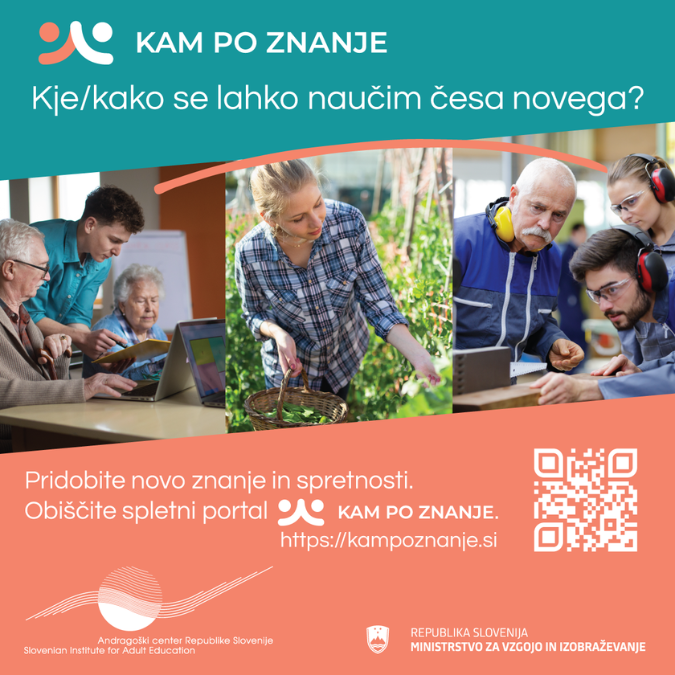
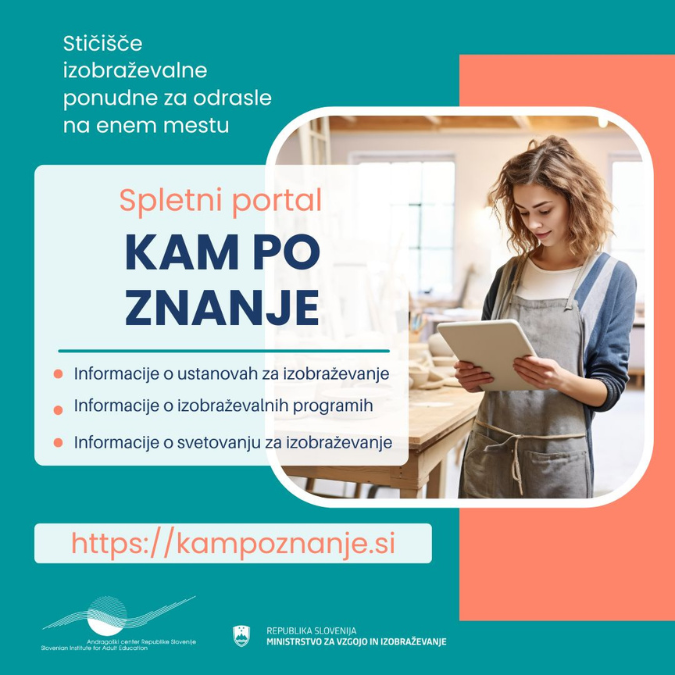
In recent years, the platform has featured around 370 providers of formal and non-formal adult learning and education. Together, they offer approximately 4,000 educational programmes and other learning opportunities. Simple and advanced search functions enable the wider public to access essential information about both. In addition, the platform offers a wealth of relevant content, including links to related or complementary platforms. Beneath its relatively engaging and content-rich interface lie extensive relational databases that could, in many ways, be regarded as registers.
The quality of the ALE system remains a constant challenge
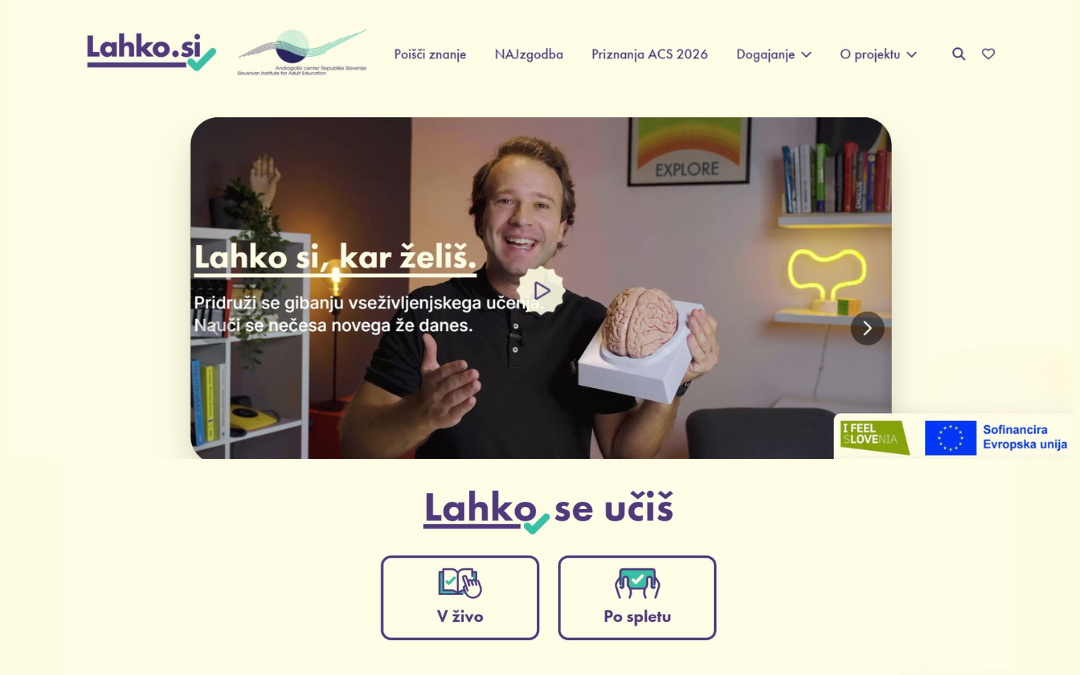
The quality of any information system (IS), including the Where to Get Knowledge platform, depends on a range of factors, chief among them the reliability and timeliness of the data. In this regard, we depend greatly on the cooperation of providers, who are responsible for entering and updating their data on an annual basis. The SIAE supports this process both technologically and substantively, by promoting the system, coordinating its use and applying the collected data for various purposes. Over the past year, these data have gained renewed importance and a broader context through the Lahko.si platform, developed within the Awareness-Raising for Lifelong Learning project.
Completeness of information is equally vital, yet it remains one of the most vulnerable aspects of this IS. From a systemic perspective, the platform mirrors the broader fragmentation within ALE – particularly in its non-formal and informal dimensions. In practice, the actual number of providers far exceeds the 370 currently represented. Many remain unknown to us, and they themselves are also unaware of this opportunity for free self-promotion. Some may not even recognise that their activities qualify as adult learning and education, especially if these are not directly associated with the education sector.
Gaps in the data are also evident at the level of individual programmes. Details such as dates, fees or other practical information that learners need to make informed decisions about their participation are often missing.
Is it, therefore, enough to consult Google or turn to AI?
For many reasons that extend beyond the scope of this contribution, the answer to this question must, of course, be no. We take pride in the Where to Get Knowledge platform and recognise that Slovenia is among the few countries that collect ALE data at a national level.
In recent years, an additional reason for continued investment in the platform – and its wider use – has emerged. A reliable, or indeed more robust, IS built on interconnected registers could provide essential support for the implementation of current policy measures, such as individual learning accounts, micro-credentials and potentially others. Achieving this would require the integration of several existing information systems and the development of new registers. Just as crucially, it would necessitate the creation of an interface capable of guiding users – potential learners – in a reliable and multi-layered way as they navigate learning and career decisions.
This challenge was taken up through the RALExILA project
Some years ago, the European Association for the Education of Adults (EAEA) invited us to participate in a project focused on reviewing AE providers and programmes, and on improving the quality of the underlying data. We declined the invitation due to limited human resources. We were also conscious of the shortcomings already outlined – issues that cannot be fully addressed with the financial resources currently available to us.
In the meantime, the project, titled RALExILA, was launched in 2023 and is expected to conclude in March 2026. As described on the project website, its aim is to develop and implement a model for an integrated information system of national registers on ALE, designed to support the introduction of Individual Learning Accounts (ILA).
The project methodology is rooted in the principles of interoperability, accessibility and inclusiveness. The RALExILA model comprises both a so-called soft framework – which includes mechanisms for quality assurance and governance of the ALE system – and a hard framework, which consists of an information model and implementation guidelines. The information model is developed through a collaborative design process, with a strong focus on accessibility and user experience. It also tackles common challenges such as integrating quality assurance criteria, ensuring sustainability and offering innovative, effective user guidance.
In addition to the EAEA, the project partners include the Knowledge Innovation Centre (KIC), Malta; Algebra University College (AUC), Croatia; the Association of Adult Education Institutions in the Slovak Republic (AIVD SR), Slovakia; and the Centre for the Advancement of Research and Development in Educational Technology (CARDET), Cyprus. Other organisations are also involved, including the Lifelong Learning Platform.
We became involved in RALExILA indirectly
We were pleased that the project partners recognised Slovenia as a country with valuable experience and a functioning – though not without its limitations – national platform and register. As a result, we were invited to contribute on several occasions.
Our involvement included participation in desk research, which, in addition to the partner countries – Cyprus, Croatia, Malta and Slovakia – also covered six others: Finland, France, Ireland, the Netherlands, Portugal and Slovenia. Each of these countries, of course, has a distinct ALE system, shaped by its own socio-political, economic and cultural context. The aim of this phase of the project was to examine the state, structure and effectiveness of ALE systems, as well as individual learning accounts, in each country. This involved analysing governance frameworks, quality assurance mechanisms and data models, with the goal of identifying gaps and opportunities for improvement. The outcome is a comprehensive report titled Report on Framework, Content and Needs Analysis for the Implementation of National Registries for ALE in Europe.
We shared our professional perspectives at two international webinars: Connecting the Dots: ALE Registries and Individual Learning Accounts, organised by the EAEA on 16 September 2025, and Quality, Interoperability & Inclusion in Adult Learning: Rethinking Provider Assurance in Digital Ecosystems, hosted by the EDEH platform on 18 December 2025.
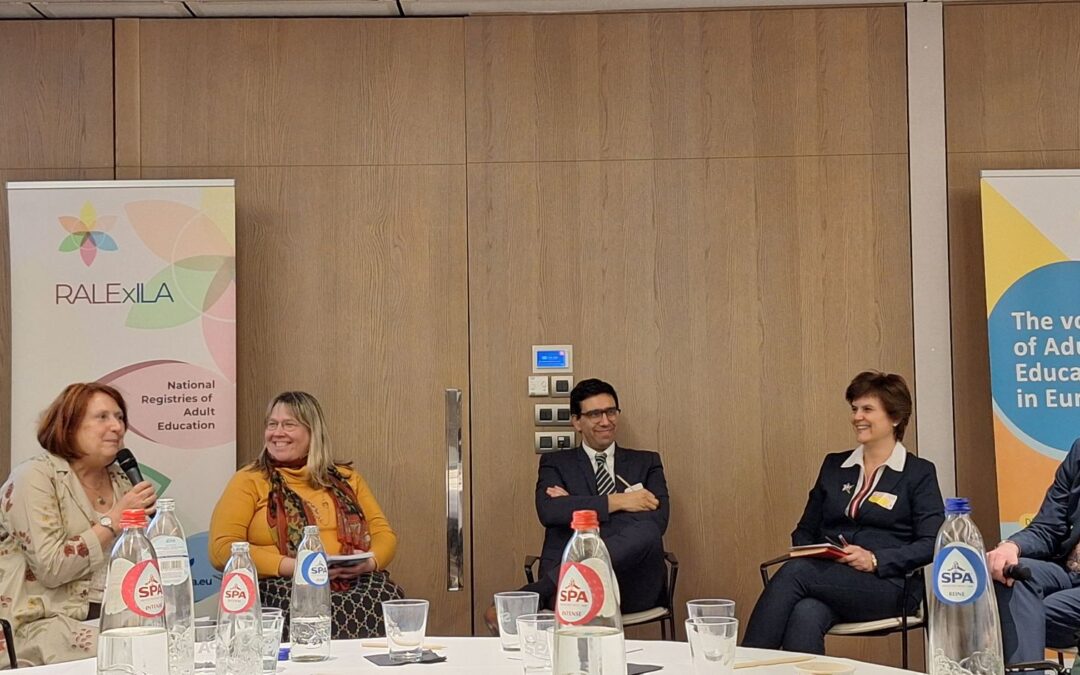
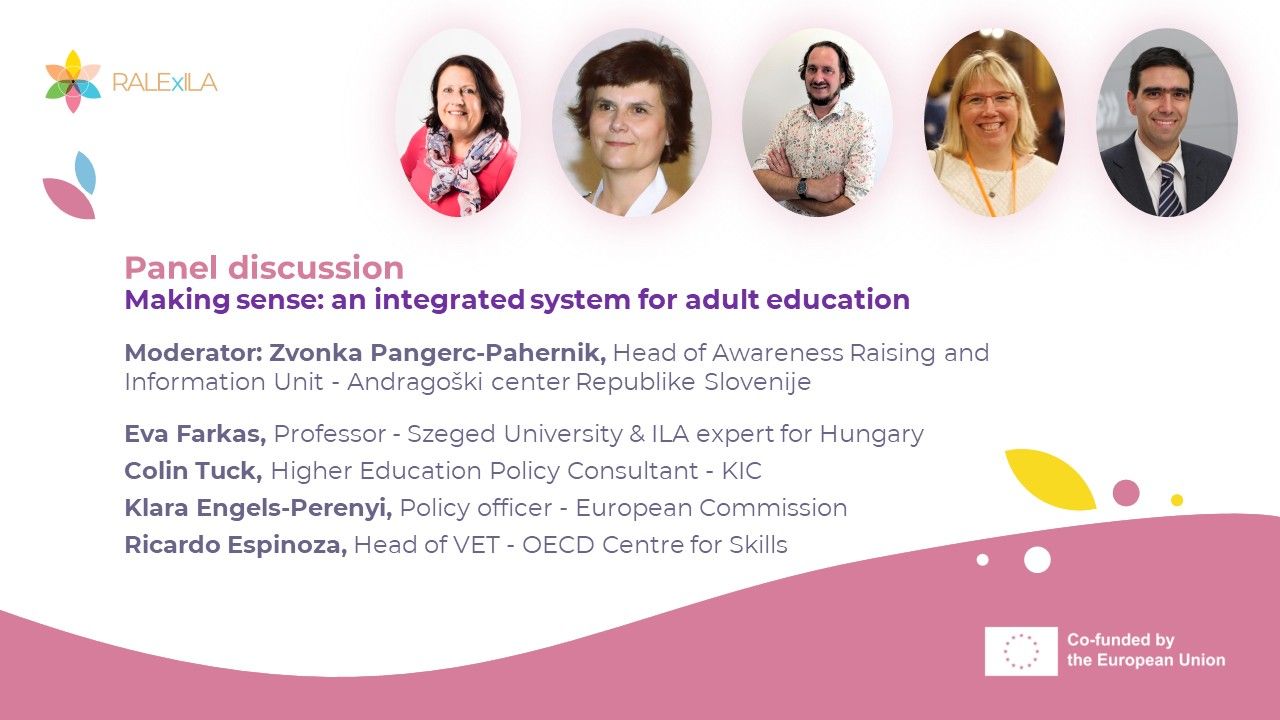
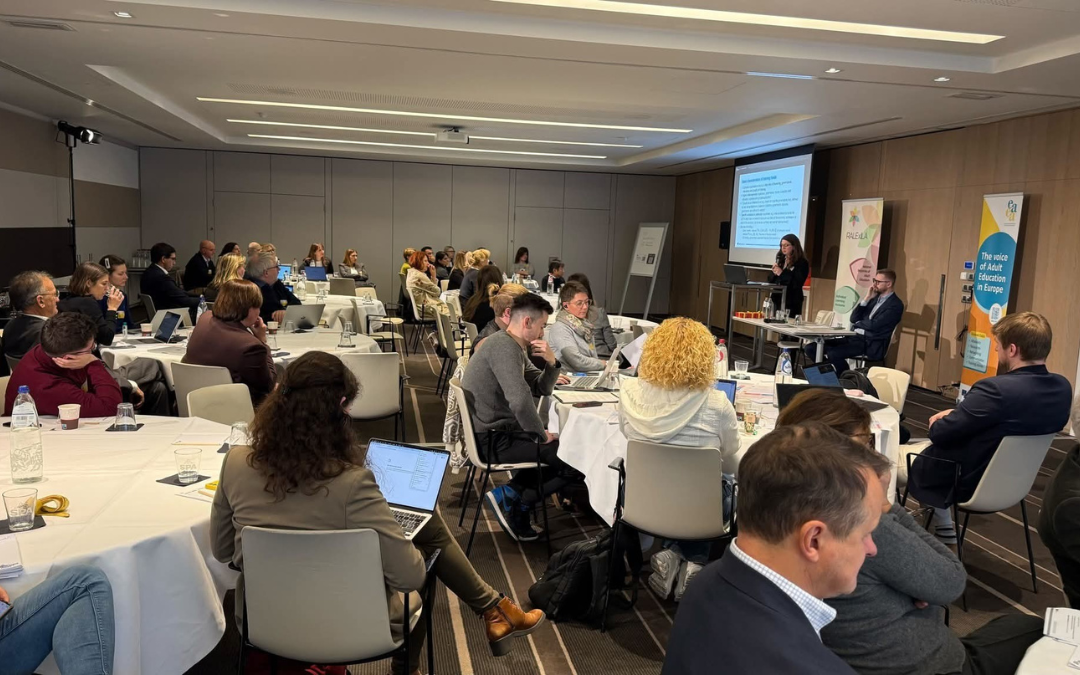
In addition, we were honoured to be invited to co-chair the closing panel of the final conference, One Europe, Many Learners: toward an integrated ALE ecosystem in Europe, held on 3 December 2025 in Brussels. The event gathered more than 80 experts in ALE, information systems and quality assurance in education. Participants included representatives of the European Commission, the OECD, CEDEFOP, the Lifelong Learning Platform, national and regional public authorities, European education and quality networks, as well as members of the academic community.
At this event, three in-depth contributions on individual learning accounts and instruments for implementing policy measures were followed by workshops focusing on quality assurance, information systems, governance and policy alignment. In the closing panel, leading experts shared both the participants’ key findings and their own professional and personal reflections. I, the author of this article, had the opportunity to speak about Slovenian experiences in these areas. I emphasised that the RALExILA project undoubtedly provides an excellent springboard for further work across all three fields. However, in my opinion to move forward, several conditions must be met, including:
- strong commitment at multiple levels and among various stakeholders – from policy-makers, through ALE professionals and practitioners, IT solution providers, to learners themselves, for whom the outcomes of these efforts are ultimately intended;
- stable funding for such initiatives, which should not be treated merely as time-limited projects, but should find, or secure, a lasting place within public budgets;
- a coordinator for these endeavours – a bridge between policy, professional expertise and practice – underlining the relevance of institutions such as the SIAE.
Vsebina celodnevnega dogodka je poglobljeno predstavljena v članku Viole Pinzi iz EAEA.
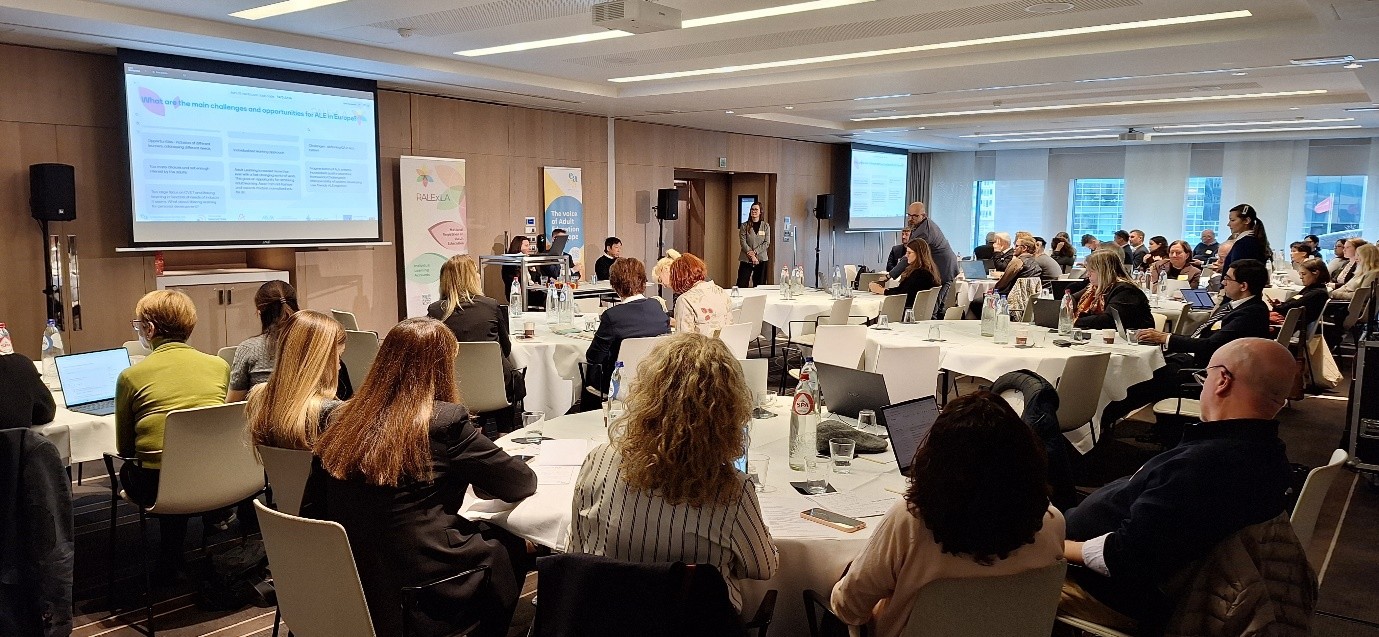
The full-day event is explored in greater depth in an article by Viola Pinzi of the EAEA.
Our involvement in the RALExILA project will continue in the coming year, with pilot testing of the RALExILA model taking place within the framework of the EAAL 2026–2027 project.
Zvonka Pangerc Pahernik, MSc (zvonka.pangerc@acs.si), edited by Ana Peklenik (ana.peklenik@acs.si), both SIAE