


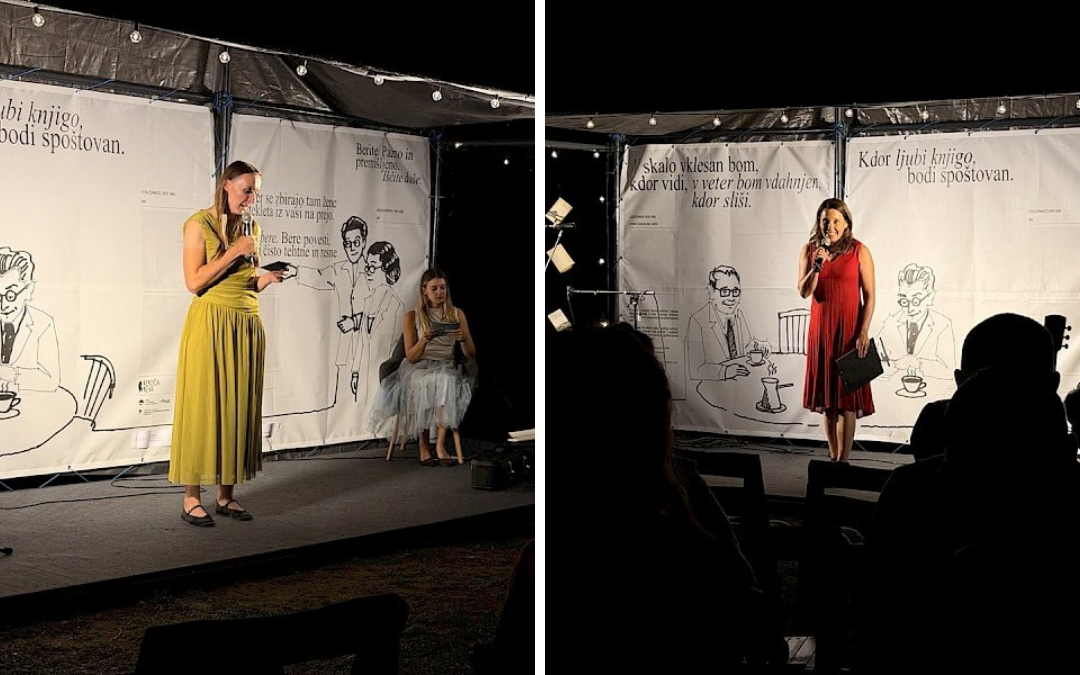
The first Beroča reka event, whose name symbolises a flowing river of reading, took place from 21 to 23 August at the Kolpa campsite in Vinica. It is an example of an innovative learning environment developed as part of the EAAL project, coordinated by the Slovenian Institute for Adult Education. Organised in cooperation with the local community, the event was held for the first time in the Municipality of Črnomelj and was expertly coordinated by the Črnomelj Adult Education Centre (in Slovenian).
A wide range of stakeholders joined forces to organise the event: the Municipality of Črnomelj as honorary patron, the local cultural centre Kulturni dom Črnomelj, the Poljane Association of Stari trg ob Kolpi, the Oton Župančič Vinica Cultural and Arts Association, the Črnomelj Library, the Črnomelj Winegrowers’ Association, the Vinica Volunteer Fire Brigade and the Vinica Sports and Tourism Association.
The Beroča reka project aims to raise awareness of reading culture among adults, particularly parents and their children. It seeks to foster a love of reading while creating an opportunity for cultural and economic value to complement one another. Culture and business have joined forces. After all, a cultural event enriches the local tourism offer and provides local businesses with an opportunity to promote their products and services.
Various international studies (PISA, PIAAC) have highlighted a global decline in reading literacy across generations. Slovenia has experienced a particularly marked decline in this respect. The abundance of easily accessible visual and multimedia content often deliberately draws users towards consumerism. Many wonder whether the effort and time required for reading are really worthwhile. Beroča reka, however, focuses less on exploring the causes of this phenomenon and more on creating positive reading experiences and memories. Those who have enjoyed reading will recognise what research confirms: reading stimulates imagination, empathy and critical thinking while bringing people closer together. Through the project, we want to strengthen this conviction and share it with as many people as possible. In this innovative learning environment, participants enjoy positive reading experiences, exchange views on reading and discover new reading material and techniques. If the river of reading flows strongly enough, it may even carry along those who do not read or have had negative experiences with reading. Anyone can become an enthusiastic reader. Above all, we can all talk about reading, even if we do not consider ourselves readers. Hearing the voices of both readers and non-readers matters, because everything begins with dialogue. This is how we can create something together, with everyone contributing and gaining from the shared experience.
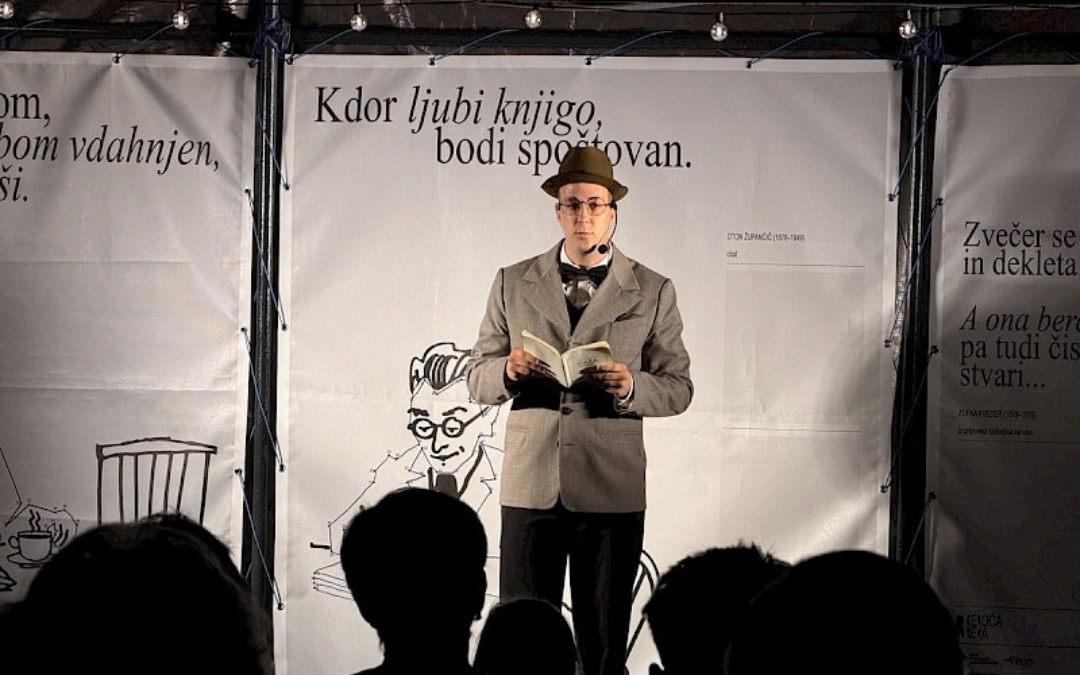
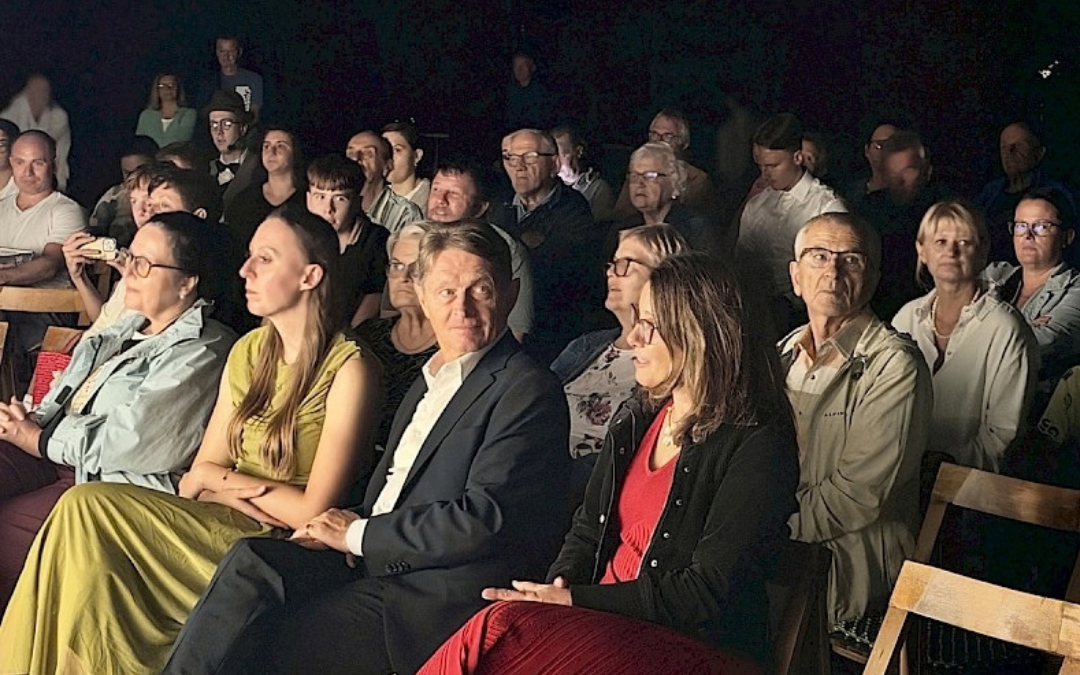
The event in Bela krajina proved to be quite a challenging debut. Not only was it being held for the first time, but after a prolonged period of heat and drought, the weather suddenly took a turn for the worse, bringing heavy downpours, strong winds, thunder and lightning. Until the very end, we were unsure whether we could carry out the entire programme (in Slovenian). Unfortunately, repeated rainfall meant we had to cancel spontaneous reading sessions in the shade of the trees and gatherings around stands offering local delicacies. The morning outdoor exercise inspired by poetry also attracted only a handful of children and parents because of the cold. Everything else, however, made up for these setbacks and went even better than expected. More than 100 people attended the opening event, even though several consecutive storms had significantly lowered temperatures and prompted many guests to leave the campsite early. They listened to and read poetry and prose by four Slovenian literary figures whose birth or death anniversaries are commemorated this year. The highlight came when audience members accepted the invitation to read or recite a poem of their choosing, whether a favourite from the rich treasury of poetry or an original work they had written themselves.
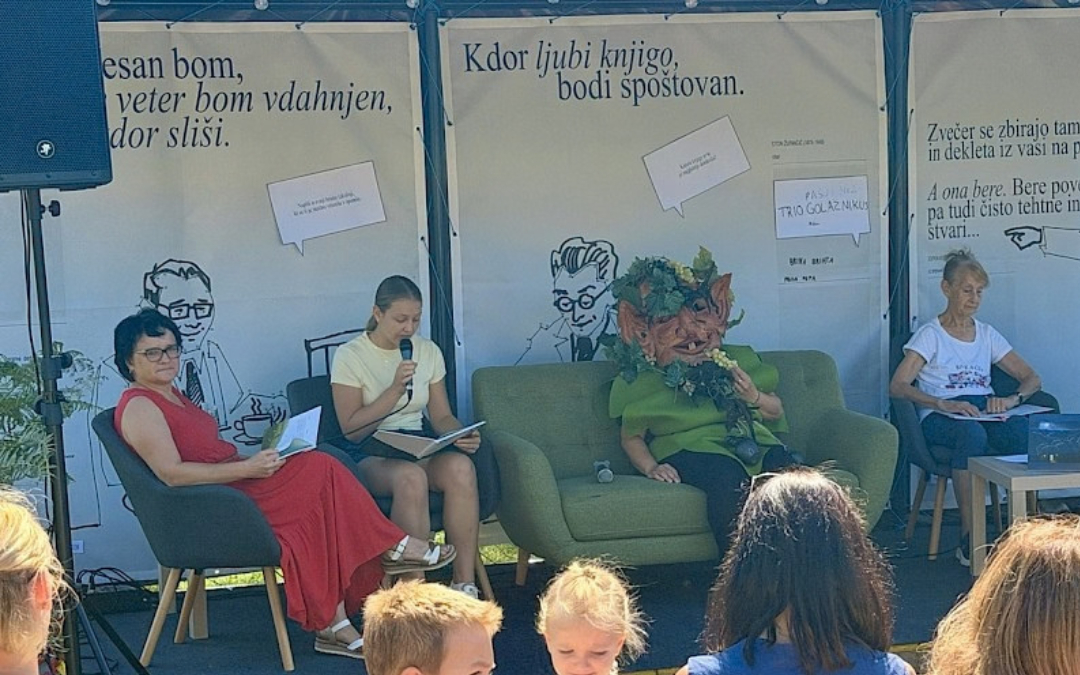
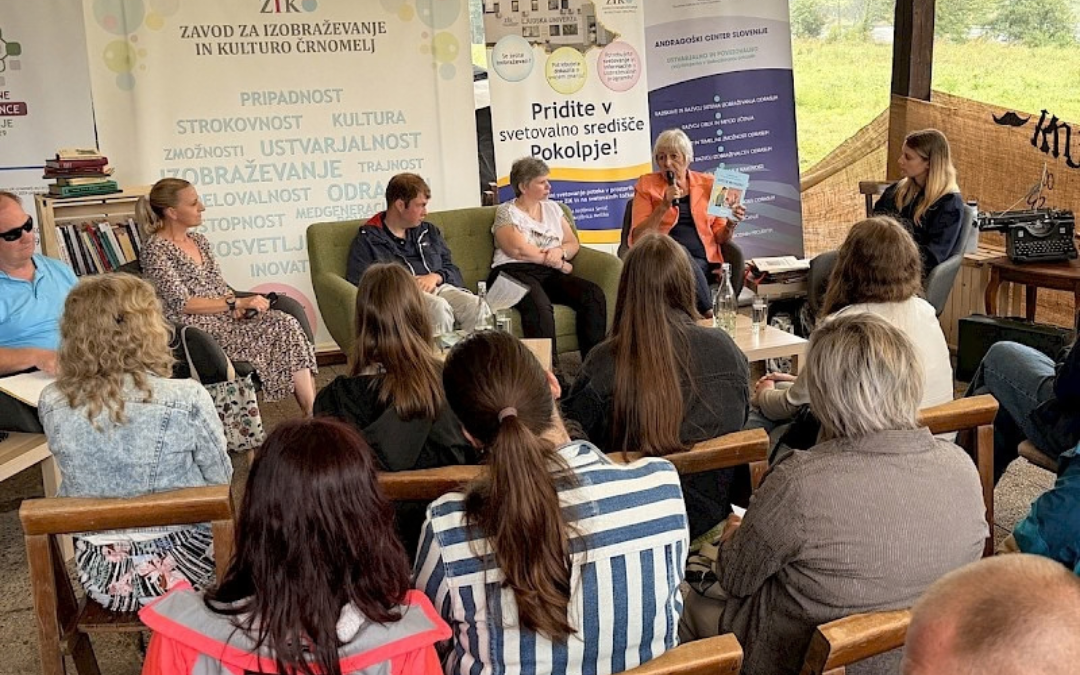
A similar number of people took part in the various activities on the second and third days. The interactive puppet show attracted the most children and parents. Adults were particularly interested in the panel discussion on reading accessibility. The speakers included people who face and overcome various barriers to reading, as well as professionals who support them. The discussion revealed that reading is a broad and all-encompassing concept. It involves not only visual but also tactile perception, and is not merely a cognitive ability but also an emotional and physical practice. Reading is not simply about receiving information; it also involves reflection. We engage with reading and experience it with our whole bodies. Conversations about reading can therefore extend far beyond the content of what has been read. Young poetry reciters who had participated in the Župančičeva frulica competition also contributed to the event. The Preloka musicians, accompanied by soloist Ema Starešinič, a student of operatic singing, performed several traditional folk songs from Bela krajina.
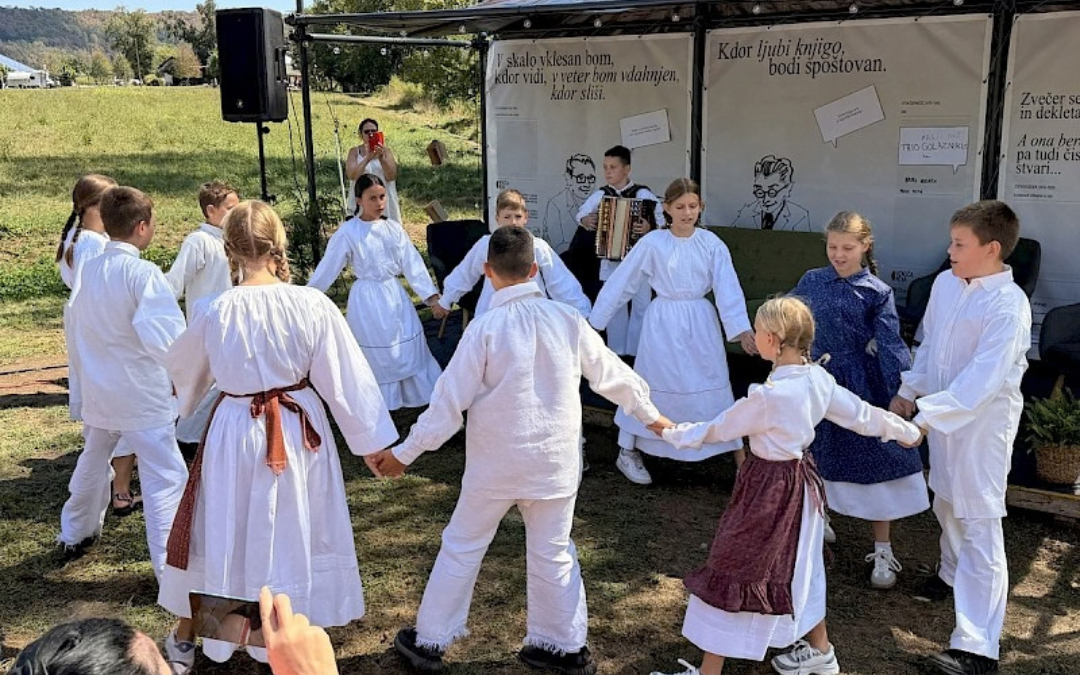
As the event took place outdoors, gathering feedback from participants proved quite challenging. Nevertheless, we managed to do so through short interviews with randomly selected participants. Folowing the interactive puppet show we also invited parents and children to complete a brief questionnaire consisting of five closed-ended questions and one open-ended question. Children who could not yet write were interviewed instead. In addition to asking participants to rate the event, which received the highest possible ratings, we wanted to find out to what extent it had encouraged them to read more. The event had the greatest impact on the youngest children’s motivation to read. One young interviewee told me that she had already read three books during the event (in two days), while her friend, who could not yet read, said that she liked Peppa Pig picture books best. Parents and children around the age of ten and older generally selected the middle response on this question. The puppet show and the event as a whole had encouraged them to think about reading, but they were not convinced that it would lead them to read more. Nevertheless, following the interactive puppet show, the average rating on a five-point scale was between 4 and 5, with a rating of 5 indicating the greatest influence on more frequent reading in the future. We included 12 randomly selected participants from a total of approximately 40 participants in our sample.
We received somewhat even more encouraging responses on the final day from parents who had taken part in the Treasure Hunt. Those with very young children, in particular, mostly said that the event would encourage them to read more. While browsing the book-exchange shelves and reading passages from books, they may have come across one that caught their attention. Once they opened it, they couldn’t help but keep reading. They will probably go to the library to borrow it.
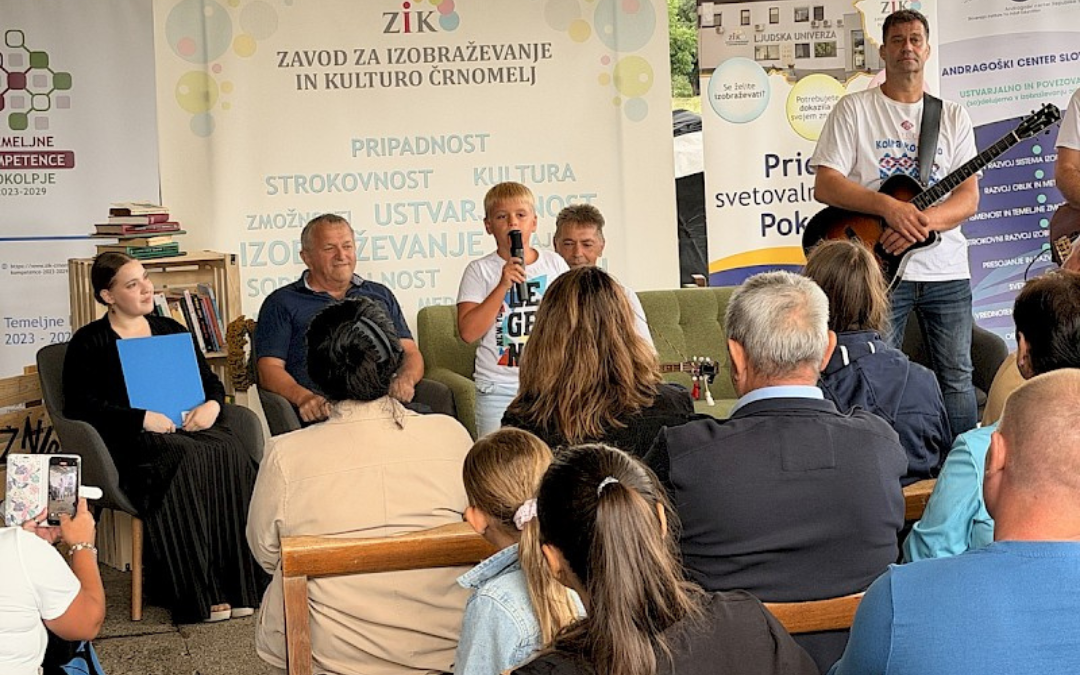
Whatever the case, the event confirmed that books can be wonderfully seductive – we simply need to open them and make room for them when we have time to relax and enjoy ourselves. And what better time than during a holiday? Dopamine, after all, works in predictable ways: it drives our pursuit of pleasure and contributes to feelings of happiness. Certain substances and activities, including harmful ones, can increase dopamine levels and lead to addiction. Reading, however, is one of the few habits worth getting hooked on. It allows us to experience a wide range of emotions and forget our troubles without introducing harmful chemicals into our bodies. Reading together brings us closer and strengthens our connections. Overall, the first Beroča reka succeeded in doing just that. We will discuss with the stakeholders directly involved in its organisation how to ensure the event continues in the future. This matters not only because it adds value to the local tourism offer, but above all because it brings people together and builds community. Rivers, too, connect people and places as they flow through different landscapes, regions and countries. Perhaps they can also bring us together through reading. Our vision is to create a map of rivers of reading across Slovenia. Would it be too ambitious to envision a map of rivers of reading across Europe? Count us in!
Natalija Žalec, MAEd(UK) (natalija.zalec@acs.si), SIAE